 Tiếng Việt
  ภาษาไทย


Introduction
As your customer base expands, it becomes more challenging to collect data from various sources. This is when customer data platforms come to the rescue. They streamline data management and segmentation, allowing for more effective marketing. Keep reading to learn more about these tools!
What Are Customer Data Platforms?
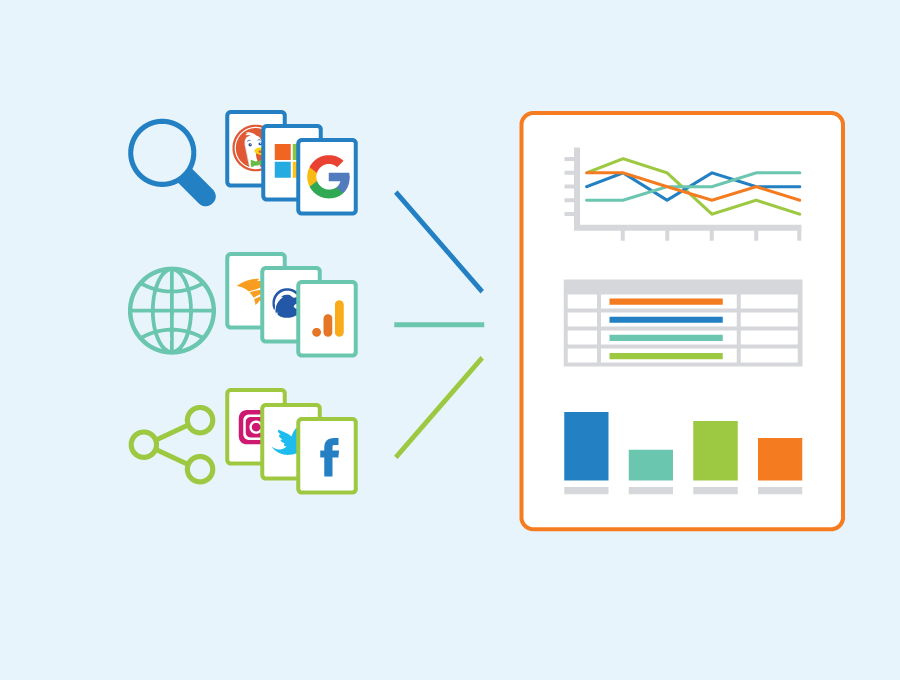
A CDP collects data from various sources. Source: Seobility
Customer data platforms (CDPs) are where businesses collect, unify, and arrange customer data from various sources, such as social media, websites, mobile apps, and offline channels. This centralized customer database offers marketers a comprehensive view of each customer profile.
Here are three key features of a CDP:
- It can identify customer data from different sources and arrange it into a persistent, transparent database.
- It grants marketing complete control over customer data collection and audience segmentation without the need for developers or IT.
- It gathers and integrates data of both known and unknown customer profiles from external platforms, like POS (point of sale), CRM, or marketing automation.
What Are The Benefits Of A Customer Data Platform?
Expanded Enterprise Collaboration
If your enterprise comprises different siloed groups working in conjunction with each other, a customer data platform will be a trusted sidekick. It collects and unifies data from all departments or branches of the entire company.
So, everyone has equal access to the database, ensuring seamless customer interactions via various customer touchpoints. Your business also has a better understanding of how strategies work for the customer base. Then, you can adjust them accordingly to optimize customer experience.
Account Suppression
For your information, suppression excludes customers from your target segment. It means they won’t receive any marketing communications, such as ads, emails, etc. A CDP offers an overview of all customer accounts so you can easily identify who to omit.
This ensures your marketing strategies target the right audience without bothering others. Once they find your products are irrelevant to them, they might consider your emails spam or scams, which can hurt your brand reputation.
More Effective Marketing (Personalized)
A well-organized database allows for more effective marketing. Source: Flickr
Have you ever visited a random website and happened to see just the right products you need? The secret behind this magic is an effective customer data platform. In particular, each visit of customers will be recorded in their profiles. Based on the collected data, businesses will segment the audience into different groups.
When marketers notice that their recommendations don’t pique customers’ interest, they will analyze their previous visits and customer behavior to suggest more personalized products on their next visit.
Improved Data Accessibility
A CDP receives unstructured, semi-structured, and structured data in a centralized platform. Data from a variety of sources is then arranged in complete customer profiles, creating a persistent, unified customer database for the entire enterprise. This allows for easier data accessibility and sharing across departments within a company.
This is quite similar to StringeeX’s omnichannel contact center. We centralize all communication channels in one place, allowing for effortless control and management.

Stronger Regulatory Compliance
Since scattered data is now centralized and controlled in one place, it’s easier for businesses to comply with numerous privacy regulations worldwide. Most CDP providers are SOC and ISO certified to handle personally identifiable information (PII) better.
Each industry will also require other different certifications. For example, the healthcare sector must follow suit with the HITECH and HIPAA regulations.
Better Customer Data Management
Customer data management will be incomplete without a centralized CDP. Undoubtedly, managing a well-organized and persistent database is much more straightforward. This also streamlines the data analysis.
Not to mention, a customer data platform contributes to better data protection and security. It ensures compliance with prominent data privacy laws, such as the CCPA (California Consumer Privacy Act) and the GDPR (General Data Protection Regulation).
How Does A Customer Data Platform Work?
Collect Data
The first step in any CDP is to gather data from various sources across the company. They can be different customer service channels, data streams, and customer relationship management platforms.
Then, it will combine and group the scattered data into centralized customer profiles based on their engagement history. This step, or the so-called identity resolution, creates an organized system of customer identities, each with unique patterns, behaviors, and preferences.
Harmonize Data
After forming customer identities, the CDP will compare and match the information with previous data across different devices and sources. Data from your known customers, such as phone numbers or email addresses, will be linked with anonymous data that they shared before, like anonymous IDs or cookies.
This step gives you an overall picture of every interaction in the entire customer journey. For instance, if they start making a purchase after clicking on a link in your marketing email, it means this marketing channel likely works for them in the next campaign.
Activate Data
The unified data will be activated for analysis. Source: Pxhere
Once the unified customer profiles are resolved, the data will be activated, allowing marketing teams to personalize the customer experience in real time.
Gain Actionable Insights From Data
Finally, your business can gain valuable insights from the activated data. Once you understand the customer profiles as a whole, it’s easier to segment them into different groups with a shared characteristic. This helps you develop personalized strategies that resonate with different target audiences.
CDP vs CRM: How Do They Differ? (200w)
A customer data platform (CDP) and a customer relationship management (CRM) system both manage customer data, but they serve different purposes. A CDP focuses on unifying data from multiple sources to create a 360-degree customer view. It integrates first-, second-, and third-party data for real-time analysis and personalized experience.
In contrast, a CRM is primarily a tool for sales teams. It tracks customer interactions like calls, emails, and purchase history. CRMs help manage customer relationships over time, focusing on known customers and prospects.
Another key difference is scalability. CDPs handle vast amounts of data, including anonymous user data, while CRMs deal mostly with structured, identifiable customer information. A CDP enables omnichannel marketing and advanced personalization. A CRM supports ongoing customer engagement.
How To Choose The Best CDP?
Choosing the right CDP depends on your business needs. Follow these steps to identify the most suitable platform:
Step 1: Evaluate your data sources. Ensure the CDP can integrate structured and unstructured data from various channels like social media, CRM systems, and IoT devices.
Step 2: Look for features like real-time identity resolution. The best CDPs unify customer profiles seamlessly and update them continuously. Consider data activation capabilities. A good CDP allows you to personalize campaigns and analyze customer journeys effectively.
Check for compatibility with your existing tools. Opt for a CDP that integrates easily with your MarTech stack. Scalability is key. Ensure it can grow with your business and handle increasing data volumes.
Step 3: Focus on compliance. A reliable CDP should offer strong data governance and consent management features. This ensures data privacy while maximizing your marketing efficiency.
Conclusion
Since businesses have to deal with an extensive pool of data daily, the need for customer data platforms is undeniable. These systems ensure effortless data collection, data analysis, and customer segmentation. Besides, a CDP is a requisite for effective CRM.
If you still have some queries in mind, check out other posts on our website or contact StringeeX for help!
Share the blog