 Tiếng Việt
  ภาษาไทย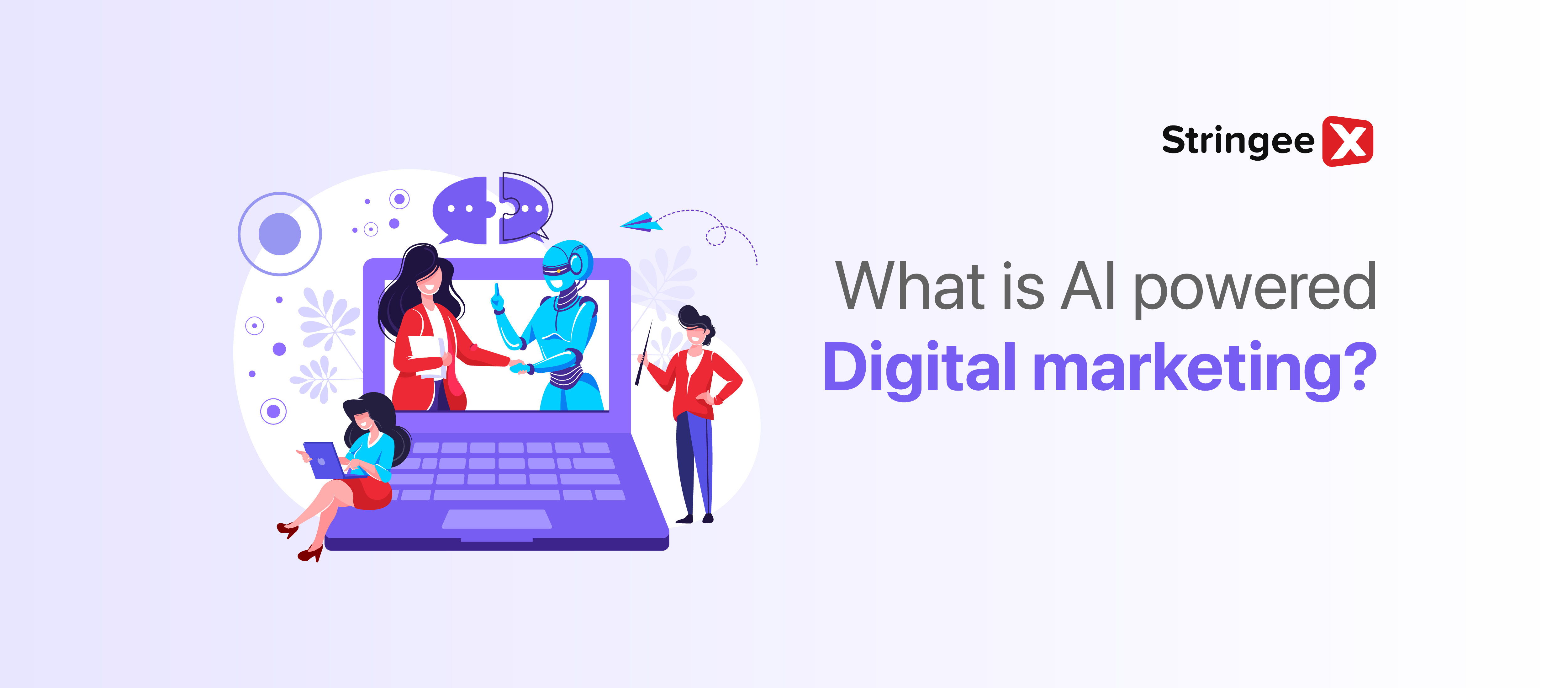


Intro
Businesses in various fields have shifted towards AI-powered digital marketing thanks to its higher efficiency and lower costs. However, saying so doesn’t mean this strategy is without its challenges. As management, you need to weigh up its pros and cons before adopting this approach. Scroll down for expert advice!
What Is AI-Powered Digital Marketing?
As the name suggests, AI-powered digital marketing leverages artificial intelligence to automate the data collection, analysis, and observations of customer behaviour and market trends. The AI-generated data will then inform businesses’ decision-making process.
In particular, AI tools and software will collect customer data and analyse their profiles to gain actionable insights. Then, they will automatically communicate with customers, providing tailored responses and allowing the marketing team to adjust the marketing strategy accordingly. This automation helps increase speed and maximise efficiency.
AI is often used in digital marketing. Source: Needpix
Pros
Boost productivity and efficiency: When AI tools are in charge of mundane and repetitive tasks, like data entry and classifying marketing leads, they save the company a lot of time and effort. The team can focus on more strategic marketing activities, like developing long-term digital marketing strategies and assessing risks.
Provide actionable insights: By automating data collection and analysis, AI eliminates guesswork and reveals accurate, valuable insights. The data paves the way for more marketing opportunities.
Increase ROI: By interpreting data, AI can predict consumer behaviour and improve the UX as well as user experience. This will drive more leads and, eventually, increase the return on investment.
Optimise marketing content: AI can create more personalised content that resonates with customers on different marketing channels based on the analysed data.
Cons
Bias & inaccuracy: Even without human intervention, AI works based on only the collected data. So, there is still room for gender, racial, socioeconomic, and cultural biases in its strategies. Not to mention, the data collected by AI-powered tools are not 100% reliable. A minor inaccuracy can lead to faulty analysis and costly mistakes for businesses.
Ethics & privacy: AI software needs to penetrate deep into users’ datasets, including sensitive personal information. This poses a risk of manipulating private data and raises security concerns.
Transparency: The more AI-generated content is used, the more people question its authorship, plagiarism, and transparency.
How To Use AI In Digital Marketing?
Brainstorming
AI tools are a great pool of ideas that assist you in brainstorming content for your marketing campaigns. In detail, it can research keywords, identify trends, generate ideas for content and visualisation, and even suggest article topics and headlines.
If you get stuck brainstorming ideas for your new marketing campaign, AI can trigger your creativity with its amazing suggestions, increasing efficiency and promoting strategic decision-making.
Research & Data Analysis
Adopting AI-powered digital marketing means that you can employ AI to collect and analyse data from various sources, like customer behaviour, market trends, and social media, quickly in real-time. This makes sense when you are dealing with vast amounts of data and are working on diverse marketing channels.
Even better, you can research the market and analyse your competitors with the help of AI. Once you understand competitors’ market positioning, keywords, and marketing tactics, your business can develop a competitive edge, making your product or service stand out.
AI tools help you research and analyse customer data. Source: Spreadsheet
Content Creation
In this digital era, AI can get heavily involved in crafting marketing content, from product descriptions, social media posts, captions, and email copy to blog copy. That’s not all! Numerous AI tools support graphic and audio designing, creating audio, images, and videos with just several clicks.
That said, AI is not a one-stop solution. It requires human editing and embellishing to make the content more engaging, highlighting your business’s empathy and sympathy through the marketing messages.
Reporting
Your marketing results are measured through KPIs, which should be displayed clearly in reports. This means that you have to make many reports during the campaign so the entire team can keep up with the progress, ensuring everyone is on the same page.
This is when AI steps in, saving you a ton of hassle by automatically creating reports with well-organised visualisations. These tools can accurately gauge your performance on websites and social media platforms in real-time.
Personalization
Personalising your content has never been easier with the help of AI. Each tool offers different options for personalization. For example, some tools can automatically sync the brand message on your landing page with the running ads. Therefore, you can manage hundreds of pages at once, boosting the leads and conversion rate.
Meanwhile, others allow you to provide product recommendations tailored to each customer based on browsing history.
Mass Optimization
One AI tool can replace hundreds of human employees, delivering results in a much shorter time. This makes it a great choice for mass optimization when you have thousands of products or run large-scale marketing campaigns on various platforms.
Notably, these tools can create bold and catchy slogans, headlines, and subheadlines to capture visitors’ attention while showcasing the brand’s value. It will optimise the above-the-fold section to attract more clicks and leads.
Predict Customer Behaviour & Boost Customer Experience
AI can predict customer behaviour in the near future based on the collected data and insights, such as purchases, engagement metrics, time on page, and email opens. This enables digital marketers to forecast their campaign outcomes and develop a better strategy.
As a result, they ensure audiences have the best experience, increasing customer retention and loyalty. For example, StringeeX’s omnichannel contact centre also leverages artificial intelligence to automate call/email distribution, ticket creation, chat allocation, and more to increase efficiency and customer experience.
Reduced Admin Work
The involvement of AI tools frees up creative minds responsible for administration tasks. They can handle simple admin work like taking notes, summarising articles, and scheduling meetings. Hubspot says 63% of digital marketers harness AI software to summarise meetings and take notes.
With a less heavy workload, they can focus more on other creative, strategic tasks, increasing the efficiency and outcome of the marketing campaign.
Media Buying
AI transforms media buying by automating the selection of ad placements, optimising for maximum ROI and precise audience targeting. With AI, marketers no longer need to manually choose websites or platforms; instead, advanced algorithms handle the process.
This allows for more efficient and effective campaigns, ensuring that ads are placed where they will have the greatest impact, all while saving time and resources.
Chatbots
AI-powered chatbots enhance customer engagement by automating responses to common inquiries, nurturing leads, and scheduling calls. These chatbots, equipped with natural language processing, can provide personalised interactions, guiding customers through their journey and answering questions instantly.
This improves customer satisfaction and allows marketing teams to focus on strategic marketing tasks while the chatbot handles routine communications.
Chatbots can handle routine communications. Source: Stockvault
Automated Email Marketing Campaigns
AI streamlines email marketing by automating content creation and analysing recipient behaviour. By generating personalised and engaging email content, AI helps marketers craft effective campaigns that resonate with their target audiences.
Additionally, AI can track and learn from recipient interactions, enabling continuous improvement of email strategies. This automation reduces the time spent crafting emails, allowing marketers to focus on broader campaign objectives.
Conclusion
Now, you should know what AI-powered digital marketing is. AI tools have found their way into marketing for a long time and are becoming a useful supporting hand for marketers. While you can employ AI in various aspects, weighing its pros and cons carefully before using it is essential. If you need more help, contact StringeeX!
Share the blog