 Tiếng Việt
  ภาษาไทย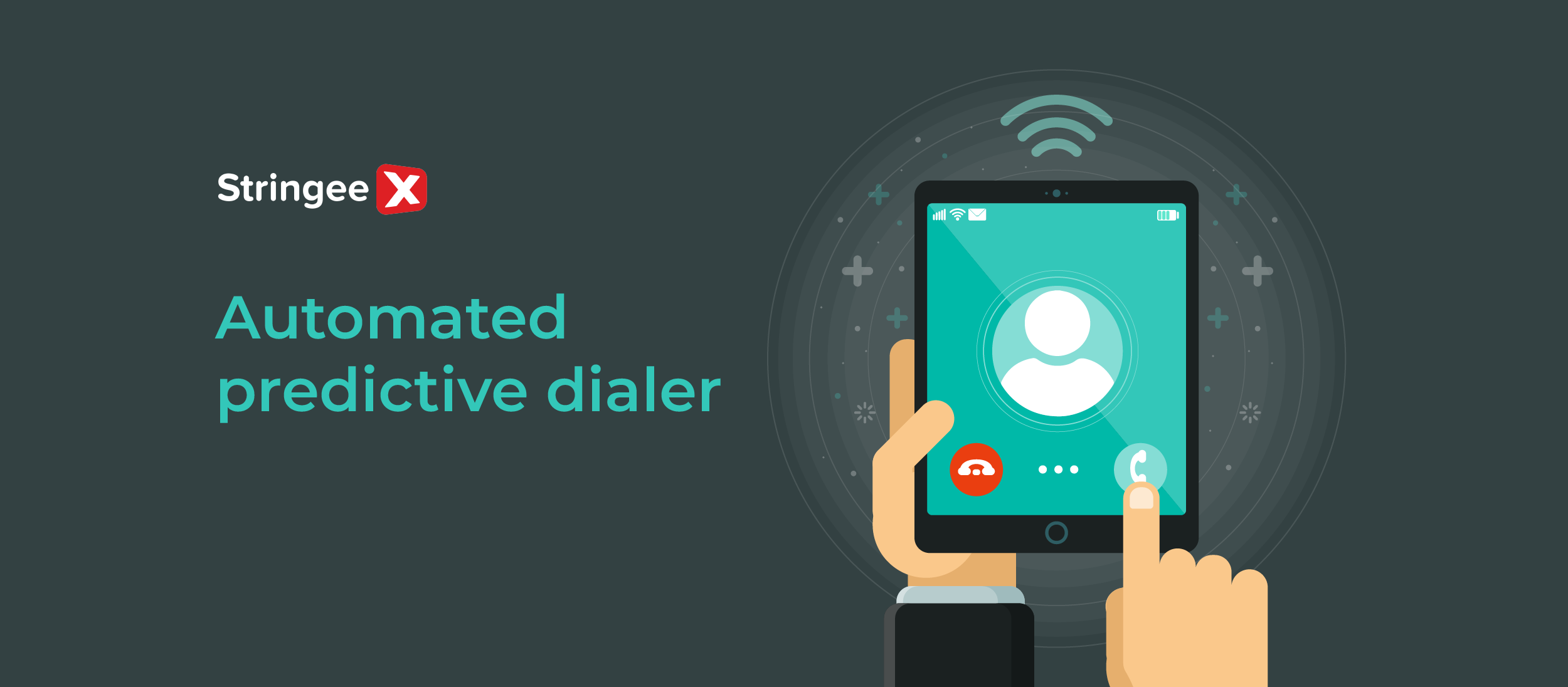


Introduction
When the topic of call centres comes up, images of agents dialling numbers by hand often spring to mind. But that's not how it works anymore: many centres now use an automated predictive dialer to boost their productivity. Keep reading to find out more about this latest technology!
What Is An Automated Predictive Dialer?
An automated predictive dialer uses smart technology to analyse the call data and automatically dial just before agents are free. The goal is to connect live calls and maximise agent talk time. Let's walk through a brief overview of how it works:
It automatically dials the next call just before agents finish their current calls (Source: Wiki).
Step 1. Analyse data
The dialer uses historical call centre data (e.g., average call duration, agent handle time, call abandonment rates, etc.) to forecast an agent's availability for the next call. Factors like agent performance variations and even break schedules are also considered.
Step 2. Optimise dialling
Next, the dialer calculates an optimal call ratio based on the predicted agent availability and handle time. This ratio determines how many calls to initiate compared to the number of available agents.
For example, a ratio of 3:2 might mean dialling three numbers for every two agents, anticipating some unanswered calls or busy signals.
Step 3. Adjust in real-time
Note that the dialer will constantly learn and adapt. It monitors call activity closely in real time and examines factors like answer rates, agent status changes, and unexpected events (like system outages). Based on this data, the call ratio is fine-tuned throughout the day to help utilise agents at the highest level.
Step 4. Route calls
High-quality dialers do not waste agents' time; as mentioned above, they use various techniques to identify unanswered calls, busy signals, and voicemails. These calls are either dropped or placed in a separate queue for later follow-up.
Step 5. Connect with agents
Only when a live person answers does the dialer connect the call to an available agent. This design ensures agents only deal with live conversations, a great way to maximise their productivity.
Extra: Other Features
- Skills-based routing: Some predictive dialers integrated with virtual centres (like StringeeX) can route calls based on agent skills or customer needs. For example, a customer needing technical support might be directed to an agent with specific expertise.
- Do-not-call list compliance: The dialer can automatically check phone numbers against Do-not-call registries to ensure compliance with regulations.
4 Benefits of An Automated Predictive Dialer
Call centres see a significant boost in overall productivity (Source: Pexels).
Increased Productivity
The constant loop of dialling and waiting for answers (not to mention potential encounters with busy signals or voicemails) usually eats into valuable talk time.
But predictive dialers solve that problem for you! Just moments before agents finish their current call, the next number on the list will be automatically dialled to eliminate frustrating lulls. Agents can handle at least 20% more daily calls as a result; multiply that across an entire call centre, and you see a significant boost in overall productivity.
Sales Boost
As we just discussed, dialers automatically connecting agents with live prospects will translate to more calls made throughout the day. Increasing conversations means increasing targeted outreach and higher sales — it's just that simple.
Plus, do not forget that sales calls usually require focus. Since predictive dialers already filter out unproductive calls, your agents can stay laser-focused on having productive exchanges with potential customers. That's how you optimise their selling time!
Great Customer Service
This one is self-explanatory. As the conversations keep flowing, customer wait times will naturally cease. Your agents are always ready to help the moment a customer calls — no more listening to elevator music.
Getting stuck on hold is never a pleasant experience, after all, so reduced hold times mean happier, more satisfied customers who are willing to stay with your brands and products!
Better yet, when integrated with CRM systems, these dialers can route calls to agents with the most relevant skills. Your customers will get the best possible help from the get-go.
Data Insights
Every call made through a predictive dialer is a data point. The dialer can easily track factors like call volume, answer rates, call duration, and even reasons for call abandonment (calls dropped before completion).
This huge data collection might be further analysed to identify patterns - for example, a specific time of day that yields the highest connection rates with qualified leads. From there, you can:
- Optimise call scheduling
- Track individual agent performance metrics and identify areas that require additional training.
- Refine dialling strategies and script development.
Simply put, it's basically a built-in feedback loop that helps you constantly improve your call centre operations.
Automated Predictive Dialer vs Automated Dialer: What's Their Difference?
Both options work well for different business needs (Source: Rawpixel).
The Key Distinctions
Before discussing further, let's review their core functionality:
An auto dialer acts like an automatic device that systematically works through a list, calling one number at a time to deliver pre-recorded messages. Some models simply connect any answered call to an available agent, regardless of their current call status.
Meanwhile, a predictive dialer employs intelligence and analyses historical data to predict when an agent will be available. It then initiates the next call just before that predicted time to seamlessly connect live calls with agents.
From this overview, it's easy to spot one key differentiator: predictive capabilities.
Auto dialers lack the ability to forecast agent availability, which is why potential downtime between calls is still a huge possibility. On the other hand, predictive dialers do a far better job using algorithms to minimise such a lull.
Other differences to consider:
- Data management: Auto dialers primarily track basic call metrics, while advanced predictive dialers might monitor a wider range of metrics, such as success rates, call abandonment rates, etc.
- Cost considerations: Needless to say, auto-dialers generally have lower upfront costs due to their simpler technology. On the other hand, predictive dialers and their need for ongoing technical support often require a higher initial investment.
- Scalability: Given the limited data for optimisation, some auto-dialers struggle to handle high call volumes efficiently. That's not an issue with predictive dialers, however, as they scale well and can use real-time data to keep improving.
Which Is Better for You?
The answer depends. From our research, auto-dialers are the better choice for:
- Small call centres: They are simple to set up and manage - a good fit for smaller operations with lower call volume.
- Basic needs: Does your call centre mainly focus on straightforward communication with limited outbound calls? In that case, an auto-dialer can handle the job just fine.
- Budget constraints: Of course, not all auto-dialers are cheap, but they generally have a far lower upfront cost than predictive dialers.
On the other side of the spectrum, a predictive dialer should work well for:
- High-volume call centres: One of their strongest points is maximising agent talk time and efficiency. Hence, they should be your first consideration when handling large numbers of outbound calls.
- Data-driven optimisation: Predictive dialers provide valuable data to analyse call centre performance and continually improve operations.
- Complex sales or customer service: The ability to route calls to agents with specific skills (through CRM integration) is quite valuable for complex interactions.
On another note, remember that predictive dialers do have some setbacks.
For one, their upfront investment is quite high and often requires ongoing technical support. Certain tech expertise is also called for during the setup process; plus, some areas have laws governing the use of predictive dialers to prevent caller harassment.
Conclusion
Of course, using an automated predictive dialer doesn't automatically guarantee better productivity; the quality of the agent-customer exchanges still matters the most. Nevertheless, it does help reduce downtime and manual tasks for your team members!
If you have any more questions about the latest call centre trends, feel free to contact us.
Share the blog